


Infrastructure
26 Jun 2026
6 min read
Bespoke Steel Fabrication: Your Questions Answered
Industrial & Construction
Infrastructure
Technical
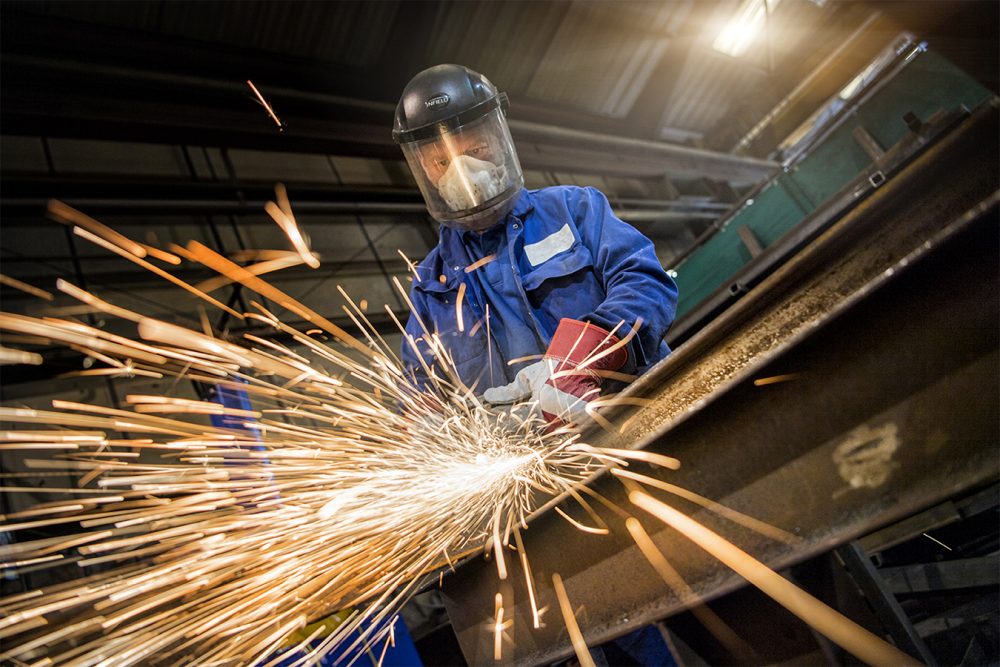
Steel fabrication covers a lot of ground, and if you have never commissioned a bespoke structure before, it is not always obvious what is involved, what it costs, or even what the terms mean.
At Wheelwash, we design and manufacture bespoke steel structures at our facility in Winsford, Cheshire, and these are the ten questions we get asked most.
Here are straight answers to each one.
Besopoke steel fabrication: 10 frequently asked questions
1. What are fabrication services?
Metal fabrication is the process of turning raw metal into a finished structure or product by cutting, forming and assembling it. It is what is known as a value-added process. You start with raw steel and engineering drawings, and you end with something built to a specific purpose.
Most fabrication work runs across three broad stages.
First comes design, where requirements are turned into detailed drawings and specifications. Then comes the fabrication itself, where the metal is cut, shaped and assembled. Finally there is installation, where the finished structure is put in place.
The usual raw materials are structural steel and sheet metal.
2. Is metal fabrication the same as welding?
No, although the two are often confused.
Welding is one part of fabrication, not the whole thing.
Fabrication is the full process of cutting, forming and assembling metal.
Welding sits within the assembly stage, as the most common way of joining the cut and shaped pieces together. It is an important step, but it is one of several, alongside cutting, forming, machining and finishing. Other joining methods exist too, including fasteners and riveting.
So, every welding job is a fabrication task, but fabrication is far broader than welding alone.
A good fabricator handles the entire process, from the first drawing to the finished, installed structure.
Want to find out more about our bespoke fabrication process? Head to our service page now.
3. How does the steel bespoke fabrication process work?
Every project is different, but the process generally follows the same stages:
- Design and specification. Requirements are turned into detailed drawings, usually using CAD software, so the finished structure is agreed before anything is built.
- Cutting. Raw steel is cut to size and shape, using methods such as shearing, sawing, laser cutting or plasma cutting.
- Forming and bending. The cut steel is shaped, typically using press brakes.
- Machining. Where needed, material is removed to create precise features such as holes or mounting points.
- Assembly and joining. The components are joined into a finished structure, most often by welding.
- Finishing. Surface treatments such as galvanising or anti-slip treads are applied for durability and safety.
At Wheelwash, this runs from an initial conversation or site visit, through design and CAD drawings, to manufacture at our Cheshire facility and, where needed, delivery and installation. You are welcome to visit the factory at any stage and see your structure taking shape.
4. What is the difference between standard and bespoke fabrication?
Standard fabrication produces off-the-shelf products to a fixed design, often with a set price list.
Bespoke fabrication is designed around your exact requirements instead: your site, your dimensions, your load requirements and any regulations the structure needs to meet.
The trade-off is that bespoke work does not come with a price list, because the structure does not exist until it has been specified. What you get in return is something built for your situation rather than adapted from a standard product.
If your requirement does not fit an off-the-shelf solution, bespoke is the way to get exactly what you need.
5. Why does in-house fabrication matter?
When a fabricator designs and manufactures everything under one roof, they keep full control of the build from start to finish. There is no waiting on third-party suppliers, and no outside limits on what can be designed or changed.
That control matters most when a project is unusual.
Extreme temperatures, hazardous materials, awkward vehicle types or an environmental risk that has not been tackled before are all easier to engineer for when the design and manufacturing happen in the same place.
At Wheelwash, everything we build is designed and manufactured at our facility in Winsford, Cheshire, which gives us the freedom to adapt and engineer from the ground up.
Every bespoke fabrication project is designed and manufactured in-house at our facility in Winsford, Cheshire. See the full scope of what we build and how we work now.
6. Why is galvanised steel used for fabrication, and how long does it last?
Galvanising coats steel in a layer of zinc to protect it from corrosion, which is why it is so widely used for structures that live outdoors or in demanding environments.
The protection lasts a long time.
A galvanised coating typically lasts from 20 to more than 50 years without maintenance, depending on the environment and the thickness of the coating.
For thicker structural steel, that figure can stretch well beyond 70 years before any touch-up is needed.
Galvanised steel also corrodes at around one thirtieth of the rate of bare steel in the same conditions.
Part of what makes it so durable is that the zinc is sacrificial. It corrodes in place of the steel beneath it, and it keeps protecting the steel even if the surface is scratched.
For UK projects, the relevant standard is ISO 1461.
Alongside galvanised steel, we use GRP anti-slip treads and grating wherever safe access is a requirement.
7. What does ISO 9001 mean for steel fabrication?
ISO 9001 is the most widely used quality management standard in the world, with more than a million certificates issued across 189 countries. It is worth understanding what it actually certifies, because it is often misread.
ISO 9001 is not a stamp on a particular product. It certifies that an organisation has consistent, documented processes in place to deliver work that meets customer and regulatory requirements, every time.
The certification is earned through an independent third-party audit, with ongoing surveillance audits and recertification every three years, so it is not a one-off badge.
In practice, it means a fabricator’s quality is auditable and consistent rather than a matter of trust. Our facility operates under ISO 9001, so every structure is built to the same documented standard.
8. What can be fabricated from steel?
Quite a lot. Common bespoke steel structures include:
- Staircases and step units, galvanised, with GRP anti-slip treads and tubular handrails
- Walkways and access platforms, built to specific dimensions and load requirements
- Water storage tanks, built to the capacity and site requirements you need
- Structural steelwork for industrial and commercial applications
- Handrails and safety barriers, galvanised and built to the appropriate safety standards
The short version is that if it can be specified, it can usually be built. If you have a requirement that does not fit a standard product, it is worth asking whether it can be fabricated from scratch.
If you can specify it, we can build it. Take a closer look at our bespoke steel fabrication service and what it could do for your site.
9. What information do you need to provide a quote?
Because bespoke work is priced individually, the more detail you can share up front, the more accurate the specification and quote will be.
Useful things to have ready include:
- The site and its condition
- What the structure is for, and any load requirement
- Dimensions
- Any regulations or standards it needs to meet
You do not need to have all of this worked out before getting in touch. Often the first conversation or site visit is where the detail gets pinned down.
10. What affects how long a fabrication project takes?
The honest answer is that it depends on the project, but the main factors are fairly predictable.
Complexity and scale make the biggest difference, followed by the amount of design and CAD work involved, the materials required, finishing processes such as galvanising, and whether installation is included
Because of this, realistic timelines are best confirmed at the specification stage, once the full scope of the work is clear. That is the point at which all the variables are known.
Got a challenge that requires a bespoke solution?
Not every requirement has an off-the-shelf solution, and that is exactly what our in-house fabrication facility is built for. Find out how we design and manufacture bespoke steel structures around your exact specification.